The Breath You Didn’t Know You Needed: How Softer Breathing Strengthens Your Bones, Joints, and Nervous System

Posted On

Categories

Avita,Practice Tips,Whole Health

Share

We live in a world that teaches us to do more. Manifest more. Push harder. Breathe bigger. Move faster. But “more” rarely satisfies. Many end up feeling drained, frustrated, and wondering why all that effort isn’t yielding the results they want—especially when it comes to something as essential as breathing and the often-misunderstood science of CO₂ tolerance and breathing biomechanics.

For years, we’ve been told that deeper, more expansive breathing is inherently better.

But what if the truth is the opposite?
What if the real secret to strong bones, healthy joints, and better balance begins with breathing less, not more?

This is not a poetic idea—it’s physiology.
And it’s one of the most overlooked links in whole-body health.

A Missing Link in Bone and Joint Health

In my earlier blogs—
Yoga for Bone Health and Balance
Bone Health Beyond Density: The Neuromuscular Connection

—we explored how thoughtful compression, healthy lines of transmission, and neuromuscular responsiveness form the foundation of strong, resilient bones.

This third article adds another layer: your breath.

Breathing affects everything—your chemistry, your posture, your nervous system, your balance, and even the way your bones repair and remodel.

One of the clearest frameworks for understanding this comes from one of my mentors, breathing specialist Patrick McKeown, who teaches that healthy breathing involves three essential dimensions:

  1. Biochemical (oxygen + CO balance)
  2. Biomechanical (breathing biomechanics and the movement of your ribs, diaphragm, and spine)
  3. Psychological (how breath influences your nervous system and stress response)

Understanding these three dimensions can significantly enhance the way you move, practice, and progress through life.

Let’s explore each one.

1. Biochemical: The CO–O Relationship Most People Miss

Every breath you take is driven not by a need for oxygen—but by the rise of carbon dioxide (CO).

Most people think CO is just a waste product.
But CO is what actually allows oxygen to be released into your tissues, including your bones and joints. Without healthy levels of CO, oxygen stays too tightly bound to hemoglobin and never fully reaches the cells that need it.

In healthy ranges, elevated CO supports smoother oxygen release and more efficient cellular respiration—which we could accurately call cardiorespiratory fitness. Yes, we can improve our “cardio” by doing less, not more.

This is the Bohr Effect, a foundational principle in respiratory physiology.

But here’s the problem:

Most people over-breathe—especially through the mouth—blowing off too much CO. I see this on the trails all the time. It’s far better to slow down, even walk, than to breathe exhaustively through the mouth.

When CO levels drop:

  • Oxygen is not delivered efficiently
  • Lactic acid builds up
  • The body becomes more acidic
  • Fatigue increases
  • Bone and joint tissues receive less nourishment

Nasal breathing and gentle CO tolerance training begin to reverse this.

This is why softer, lighter breathing supports:

  • Bone remodeling
  • Cellular oxygenation and metabolism
  • Reduced systemic acidity
  • Improved endurance
  • Calmer, steadier energy

This is invisible work—but transformative work.

2. Biomechanical: How Breath Shapes Your Structure

Breathing is also a movement practice.

Your ribs, diaphragm, spine, and pelvis all respond to the way you breathe.
When the breath is dramatic, fast, or forceful, the upper body takes over. This increases tension and disrupts healthy movement potential in the spinal column. In Avita Yoga, we focus less on static “postural alignment” and more on improving joint-centric movement, which naturally enhances spinal health and adaptive posture.

And guess what? Even when the breath is:

  • Light
  • Slow
  • Nasal
  • Quiet

…the diaphragm engages more fully, the ribs move evenly, and the spine stabilizes.

This supports:

  • Better joint movement throughout the spine and ribcage (and where there’s movement, there’s health)
  • More efficient neuromuscular signaling
  • Improved balance—a natural byproduct of the two points above

This is why the breathing biomechanics of Avita Yoga work so well with nasal breathing. The shapes invite the diaphragm to do what it’s designed to do—not through force, but through efficiency.

3. Psychological: Breath as a Nervous System Regulator

The breath isn’t just physical or chemical—it’s neurological.

Fast or forceful breathing signals threat to the brain.
Quiet breathing signals safety.

A softer breath:

  • Reduces sympathetic drive
  • Lowers anxiety and muscular tension
  • Enhances proprioception (your internal GPS)
  • Improves balance and stability
  • Supports clearer, calmer thinking

This shift is largely mediated by the vagus nerve, the main conduit of the parasympathetic system—your body’s built-in healing mode.

When the nervous system makes this shift, the body can:

  • Heal
  • Repair
  • Remodel
  • Move with less resistance
  • Absorb pressure in a healthier way

This is why the breath is such a powerful companion to joint health and mobility practices.

And yet…

For many people, slowing the breath or switching to nasal breathing can be surprisingly triggering. This isn’t a failure—it’s part of the psychological growth that comes with practice and developing a calmer, more resilient nervous system.

Be gentle. Take your time. Healing begins exactly where you are.

Why Softer, Slower Breath Makes You Stronger

When these three dimensions come together—biochemical, biomechanical, and psychological—you begin to experience the real benefits of CO₂ tolerance and breathing biomechanics, which support better oxygenation, calmer energy, and healthier bones and joints.

A softer, more efficient breath:

  • Nourishes your bones
  • Supports your joints
  • Improves balance
  • Enhances mobility
  • Sets the stage for healthy aging
  • Stabilizes your nervous system
  • Creates a healthier internal chemistry

It can be difficult to fathom at first, but give it a try—or better yet, join me in some Avita Yoga classes where this interplay becomes natural and experiential.

This is what makes Avita Yoga so effective: kind, targeted shapes paired with a breath that supports the entire body from the inside out.

A Simple Way to Begin: Start With Your Nose

If you want one simple takeaway, try this:

Breathe through your nose…all the time.

The nose was designed for breathing, as the mouth was designed for eating and talking. I touch on this in Mobility for Life, Chapter 17: Quiet Breath, Quiet Mind.

Can you develop a willingness to start simply and easily?
Try breathing only through your nose while you clean the house, wash dishes, or take a walk around the block. From there, you may be inspired to slow the breath even more—and gently explore a slight hunger for air.

Nasal breathing begins to rebalance your chemistry, calm your system, and strengthen the entire structural chain—from bones to joints, muscles, and the nervous system.

Free Class…

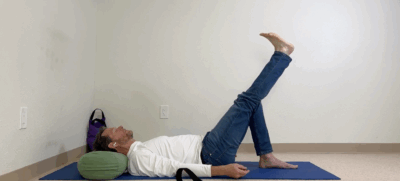
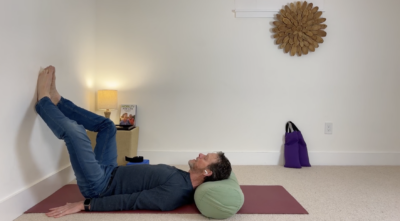
To explore this further, try this free class, where we explore breathing biomechanics, gently build CO tolerance, rebalance the breath, and integrate it with Avita shapes designed to fortify the bones and joints.

Remember, in Avita Yoga, anytime something causes you to overwork and mouth-breathe—or pulls you out of peaceful presence—it’s not a mistake.
It’s an invitation to pause, slow down, and reconnect.

This is the quiet inner path to lasting strength.
Next
Bone Health Beyond Density – Strengthening the Neuromuscular Connection for Better Balance
Category: Avita,Practice Tips,Whole Health

We live in a world that teaches us to do more. Manifest more. Push harder. Breathe bigger. Move faster. But “more” rarely satisfies. Many end up feeling drained, frustrated, and wondering why all that effort isn’t yielding the results they want—especially when it comes to something as essential as breathing and the often-misunderstood science of CO₂ tolerance and breathing biomechanics.

For years, we’ve been told that deeper, more expansive breathing is inherently better.

But what if the truth is the opposite?
What if the real secret to strong bones, healthy joints, and better balance begins with breathing less, not more?

This is not a poetic idea—it’s physiology.
And it’s one of the most overlooked links in whole-body health.

A Missing Link in Bone and Joint Health

In my earlier blogs—
Yoga for Bone Health and Balance
Bone Health Beyond Density: The Neuromuscular Connection

—we explored how thoughtful compression, healthy lines of transmission, and neuromuscular responsiveness form the foundation of strong, resilient bones.

This third article adds another layer: your breath.

Breathing affects everything—your chemistry, your posture, your nervous system, your balance, and even the way your bones repair and remodel.

One of the clearest frameworks for understanding this comes from one of my mentors, breathing specialist Patrick McKeown, who teaches that healthy breathing involves three essential dimensions:

  1. Biochemical (oxygen + CO balance)
  2. Biomechanical (breathing biomechanics and the movement of your ribs, diaphragm, and spine)
  3. Psychological (how breath influences your nervous system and stress response)

Understanding these three dimensions can significantly enhance the way you move, practice, and progress through life.

Let’s explore each one.

1. Biochemical: The CO–O Relationship Most People Miss

Every breath you take is driven not by a need for oxygen—but by the rise of carbon dioxide (CO).

Most people think CO is just a waste product.
But CO is what actually allows oxygen to be released into your tissues, including your bones and joints. Without healthy levels of CO, oxygen stays too tightly bound to hemoglobin and never fully reaches the cells that need it.

In healthy ranges, elevated CO supports smoother oxygen release and more efficient cellular respiration—which we could accurately call cardiorespiratory fitness. Yes, we can improve our “cardio” by doing less, not more.

This is the Bohr Effect, a foundational principle in respiratory physiology.

But here’s the problem:

Most people over-breathe—especially through the mouth—blowing off too much CO. I see this on the trails all the time. It’s far better to slow down, even walk, than to breathe exhaustively through the mouth.

When CO levels drop:

  • Oxygen is not delivered efficiently
  • Lactic acid builds up
  • The body becomes more acidic
  • Fatigue increases
  • Bone and joint tissues receive less nourishment

Nasal breathing and gentle CO tolerance training begin to reverse this.

This is why softer, lighter breathing supports:

  • Bone remodeling
  • Cellular oxygenation and metabolism
  • Reduced systemic acidity
  • Improved endurance
  • Calmer, steadier energy

This is invisible work—but transformative work.

2. Biomechanical: How Breath Shapes Your Structure

Breathing is also a movement practice.

Your ribs, diaphragm, spine, and pelvis all respond to the way you breathe.
When the breath is dramatic, fast, or forceful, the upper body takes over. This increases tension and disrupts healthy movement potential in the spinal column. In Avita Yoga, we focus less on static “postural alignment” and more on improving joint-centric movement, which naturally enhances spinal health and adaptive posture.

And guess what? Even when the breath is:

  • Light
  • Slow
  • Nasal
  • Quiet

…the diaphragm engages more fully, the ribs move evenly, and the spine stabilizes.

This supports:

  • Better joint movement throughout the spine and ribcage (and where there’s movement, there’s health)
  • More efficient neuromuscular signaling
  • Improved balance—a natural byproduct of the two points above

This is why the breathing biomechanics of Avita Yoga work so well with nasal breathing. The shapes invite the diaphragm to do what it’s designed to do—not through force, but through efficiency.

3. Psychological: Breath as a Nervous System Regulator

The breath isn’t just physical or chemical—it’s neurological.

Fast or forceful breathing signals threat to the brain.
Quiet breathing signals safety.

A softer breath:

  • Reduces sympathetic drive
  • Lowers anxiety and muscular tension
  • Enhances proprioception (your internal GPS)
  • Improves balance and stability
  • Supports clearer, calmer thinking

This shift is largely mediated by the vagus nerve, the main conduit of the parasympathetic system—your body’s built-in healing mode.

When the nervous system makes this shift, the body can:

  • Heal
  • Repair
  • Remodel
  • Move with less resistance
  • Absorb pressure in a healthier way

This is why the breath is such a powerful companion to joint health and mobility practices.

And yet…

For many people, slowing the breath or switching to nasal breathing can be surprisingly triggering. This isn’t a failure—it’s part of the psychological growth that comes with practice and developing a calmer, more resilient nervous system.

Be gentle. Take your time. Healing begins exactly where you are.

Why Softer, Slower Breath Makes You Stronger

When these three dimensions come together—biochemical, biomechanical, and psychological—you begin to experience the real benefits of CO₂ tolerance and breathing biomechanics, which support better oxygenation, calmer energy, and healthier bones and joints.

A softer, more efficient breath:

  • Nourishes your bones
  • Supports your joints
  • Improves balance
  • Enhances mobility
  • Sets the stage for healthy aging
  • Stabilizes your nervous system
  • Creates a healthier internal chemistry

It can be difficult to fathom at first, but give it a try—or better yet, join me in some Avita Yoga classes where this interplay becomes natural and experiential.

This is what makes Avita Yoga so effective: kind, targeted shapes paired with a breath that supports the entire body from the inside out.

A Simple Way to Begin: Start With Your Nose

If you want one simple takeaway, try this:

Breathe through your nose…all the time.

The nose was designed for breathing, as the mouth was designed for eating and talking. I touch on this in Mobility for Life, Chapter 17: Quiet Breath, Quiet Mind.

Can you develop a willingness to start simply and easily?
Try breathing only through your nose while you clean the house, wash dishes, or take a walk around the block. From there, you may be inspired to slow the breath even more—and gently explore a slight hunger for air.

Nasal breathing begins to rebalance your chemistry, calm your system, and strengthen the entire structural chain—from bones to joints, muscles, and the nervous system.

Free Class…

To explore this further, try this free class, where we explore breathing biomechanics, gently build CO tolerance, rebalance the breath, and integrate it with Avita shapes designed to fortify the bones and joints.

Remember, in Avita Yoga, anytime something causes you to overwork and mouth-breathe—or pulls you out of peaceful presence—it’s not a mistake.
It’s an invitation to pause, slow down, and reconnect.

This is the quiet inner path to lasting strength.

Next
Bone Health Beyond Density – Strengthening the Neuromuscular Connection for Better Balance

Related Posts